




















Anxiety in cats can show up as hiding, over-grooming, litter tray accidents, appetite changes, or excessive vocalisation. Creating a calm routine, improving enrichment, feeding a nutrient-rich diet, and using natural calming ingredients may help support a more relaxed and emotionally balanced cat.
Learning how to calm an anxious cat can make a huge difference to their emotional wellbeing and quality of life. Anxiety in cats is more common than many pet parents realise, especially in indoor cats, rescue cats, or cats experiencing changes at home.
Cats are incredibly sensitive to their environment, and even small disruptions to routine can trigger stress behaviours. There are gentle, natural ways to help your cat feel calmer, safer, and more secure at home.
What are the signs of anxiety in cats?
Cats often show anxiety through behavioural changes rather than obvious panic. These symptoms can appear gradually, so small changes in behaviour matter.
Understanding the symptoms and causes of anxiety is the first step towards helping your cat feel more secure and relaxed.
Excessive grooming or bald patches
Some cats lick themselves excessively as a coping mechanism for stress. Over time, this can lead to bald spots, irritated skin, or sores, particularly around the belly and legs.
Hiding more than usual
An anxious cat may suddenly spend more time under beds, behind furniture, or avoiding interaction altogether.
Changes in appetite
Stress can affect appetite in both directions. Some cats lose interest in food, while others seem to snack like they’re emotionally supporting themselves.
Litter tray issues
Suddenly toileting outside the litter tray is one of the most common signs of stress or anxiety in cats.
Increased vocalisation
Excessive meowing, nighttime yowling, or unusual vocal behaviour can indicate emotional distress.
Aggression or fearfulness
Some anxious cats become reactive, defensive, or fearful around people, pets, noises, or unfamiliar situations.
Why do cats get anxiety?
Cats develop anxiety when they feel unsafe, overstimulated, or unable to predict their environment. Cats thrive on consistency, so even small changes can feel overwhelming.
Common causes of anxiety in cats
- Moving house
- New pets or family members
- Visitors or loud households
- Thunderstorms or fireworks
- Lack of stimulation
- Multi-cat tension
- Separation from owners
- Pain or illness
- Sudden routine changes
For many indoor Australian cats, boredom and under-stimulation are surprisingly common contributors to stress.
How can I calm my anxious cat naturally?
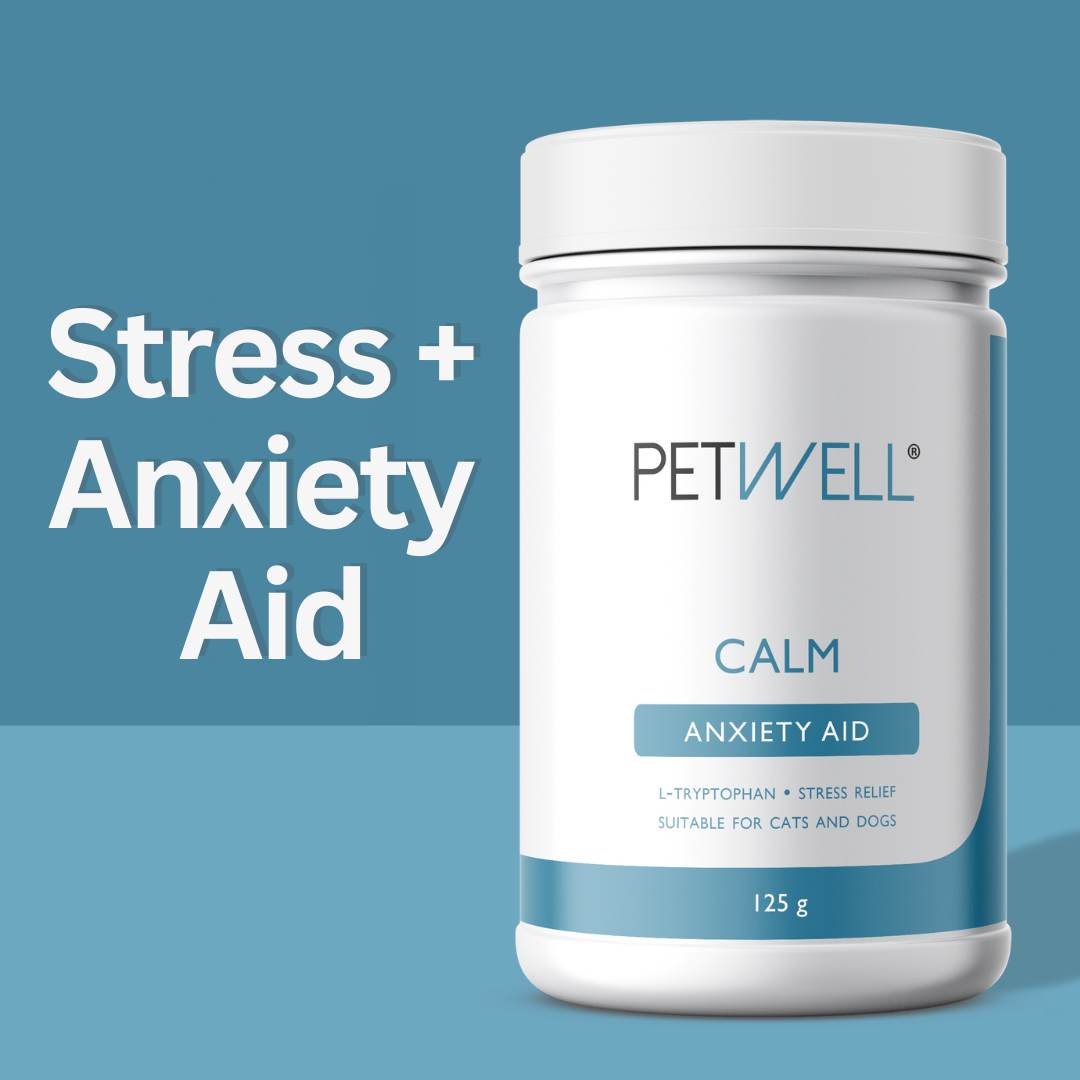
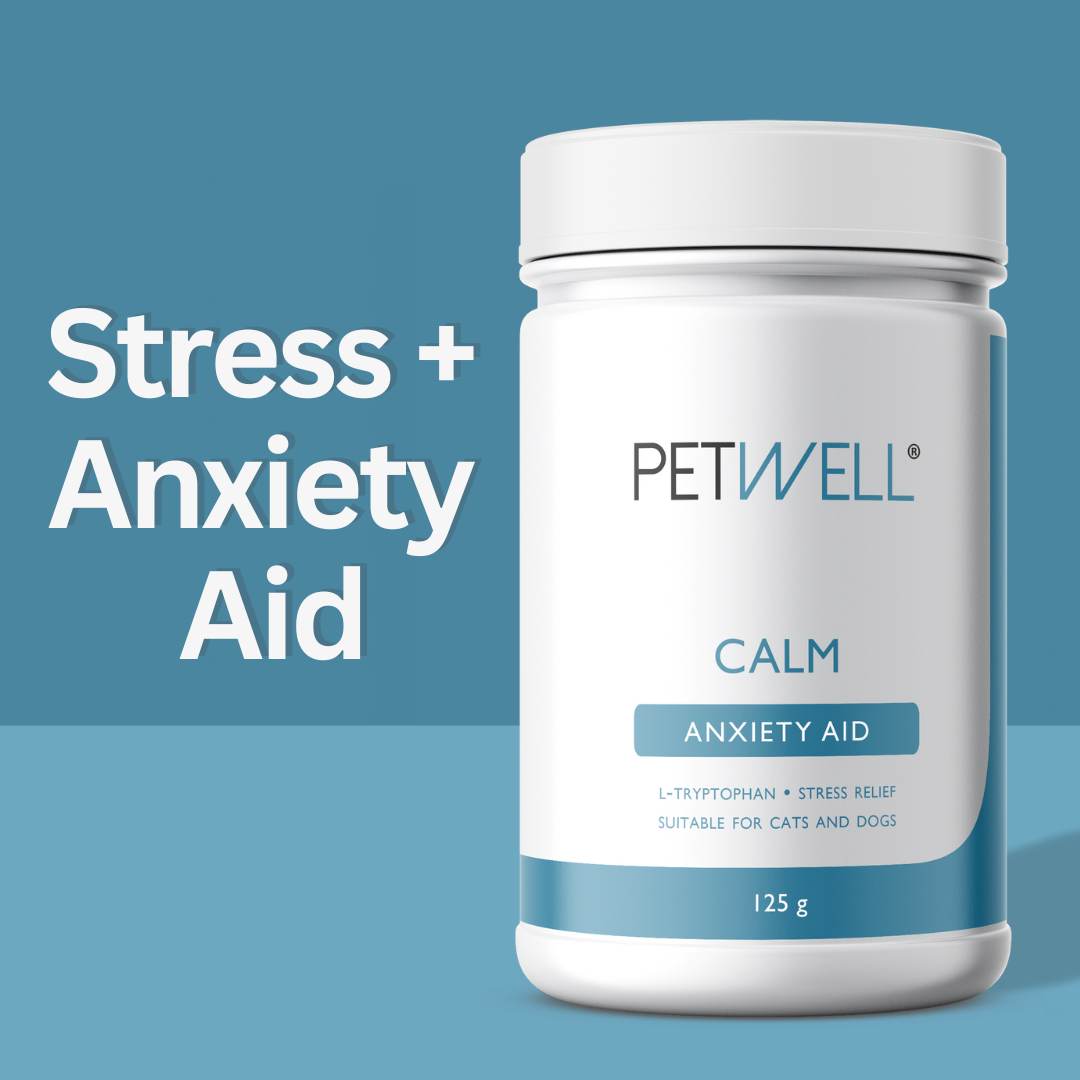
The best way to calm an anxious cat naturally is by combining routine, enrichment, nutrition, and gentle calming support like PetWell Calm supplement and treats. Cats feel safer when their environment becomes predictable, stimulating, and emotionally secure.
Create a safe retreat space
Every cat needs a quiet “escape zone” where they can decompress without being disturbed.
This could include:
- A cat tree
- A covered bed
- A quiet spare room
- A wardrobe nook
- A perch near a window
Let your cat choose when they want interaction rather than forcing attention.
Keep routines consistent
Cats love predictability. Feeding, playtime, and bedtime routines help reduce uncertainty and emotional stress.
Focus on enrichment
Mental stimulation is incredibly important for feline wellbeing.
Helpful enrichment ideas include:
- Puzzle feeders
- Window perches
- Climbing shelves
- Snuffle mats
- Hunting-style play
- Rotating toys weekly
Even short daily play sessions can help reduce anxious energy.
Use calming natural ingredients
Some natural ingredients are commonly used to support relaxation in pets, including:
- Chamomile
- Ashwagandha
- Lemon balm
- Green tea (natural source of L-theanine)
- Goat milk powder (natural source of L-tryptophan)
Pet parents looking for gentle daily support sometimes include calming supplements or functional treats as part of their cat’s routine. PetWell Calm supplement and Calm + Turkey functional treats contain whole-food ingredients traditionally used to support emotional balance and relaxation in pets.

Does diet affect anxiety in cats?
Yes, diet may influence mood, nervous system health, and stress response in cats. Nutrient-rich diets containing quality proteins and omega-3 fatty acids help support overall wellbeing, while highly processed diets and inconsistent feeding routines may contribute to behavioural stress.
Foods that may support calm behaviour in cats
- Sardines
- Salmon
- Turkey
- Goat milk
- Fresh proteins rich in amino acids
- Omega-3-rich foods
These foods contain nutrients that support brain and nervous system function.
Avoid excessive artificial additives
Artificial colours, flavours, and preservatives may contribute to behavioural sensitivities in some pets. Many pet owners choose more natural diets and treats, support overall wellbeing.
Feed meals consistently
Regular feeding schedules help create predictability, which can reduce stress in anxious cats.
What is a good routine for an anxious cat?
A predictable daily routine helps anxious cats feel safer and more secure because they know what to expect throughout the day. Consistency is one of the most effective long-term strategies for reducing feline stress naturally.
A Simple Calm Routine for Cats
Morning
- Feed breakfast at the same time daily
- Short interactive play session
- Refresh water and enrichment toys
Midday
- Quiet resting areas available
- Access to natural light or window views
- Puzzle feeder or enrichment activity
Evening
- Calm play session before dinner
- Gentle grooming or connection time
- Reduce loud stimulation before bed
Even five to ten minutes of focused interaction daily can make a noticeable difference.
When should I see a vet about cat anxiety?
You should speak with your vet if anxiety symptoms appear suddenly, become severe, or begin affecting your cat’s health and quality of life. Behaviour changes can sometimes be linked to pain or underlying medical issues.
Seek veterinary advice if your cat:
- Stops eating
- Rapidly loses weight
- Becomes aggressive suddenly
- Over-grooms excessively
- Has ongoing litter tray issues
- Appears distressed constantly
FAQ: How to Calm an Anxious Cat
How do I know if my cat has anxiety?
Common signs of anxiety in cats include hiding, over-grooming, litter tray accidents, appetite changes, excessive vocalisation, aggression, and restless behaviour.
Can indoor cats develop anxiety?
Yes. Indoor cats can experience anxiety from boredom, lack of stimulation, environmental stress, or disruptions to routine.
What naturally calms cats?
Routine, enrichment, quiet safe spaces, interactive play, and calming ingredients like chamomile, lemon balm, and L-theanine may help support calm behaviour in cats.
Can diet affect cat anxiety?
Yes. Nutrient-rich diets containing omega-3 fatty acids and quality proteins may help support brain and nervous system health.
Are calming supplements safe for cats?
Many calming supplements formulated specifically for pets are designed to support emotional wellbeing. Always follow feeding directions and speak with your vet if unsure.
The Science Behind It
Don’t just take our word for it, here are some evidence-based studies for you to review.
Research links of CALM ingredients
Disclaimer: The entire contents of PetWell emails and website are not to be taken as medical advice. The team at Pet Squad Pty Ltd trading as PetWell encourages you to make your own pet health care decisions based on your research and in partnership with a qualified pet healthcare professional.
This article was prepared by the team at PetWell. Australia’s trusted provider of natural, human-grade pet supplements and freeze-dried treats for dogs and cats. Drawing on holistic animal behaviour insights and years of working with canine clients, PetWell champions kind, calm and scientifically informed solutions for every pet parent.
Posted By Ayda Hornak - Trained in Canine Psychology and Natural Animal Nutrition Care.


